
RATLINKS: 6 FOR 26
PREDICTIONS FOR THE YEAR AHEAD

When Byron Wien died in October 2023, Wall Street lost its annual ritual of public humiliation.
For 38 years, Wien had published his “Ten Surprises” list every January. First at Morgan Stanley, then at Blackstone.
Each prediction specific. Each prediction verifiable. Each prediction designed to make him look brilliant or foolish by December. New York Magazine once wrote that the list was anticipated “with the sweaty angst reserved for interest-rate hikes.” Traders would print it out. Analysts would argue about it. And every year, Wien would return to grade himself, publicly tallying his hits and misses while the rest of the pundit class hid behind weasel words.
His definition of a “surprise” was precise: an event the average investor would give one-in-three odds, but which Wien believed had better than 50% likelihood. The gap between what the market priced and what he actually believed. He bet his credibility on that gap, year after year, for nearly four decades.
Today the void Byron left reveals something uncomfortable about how we talk about the future.
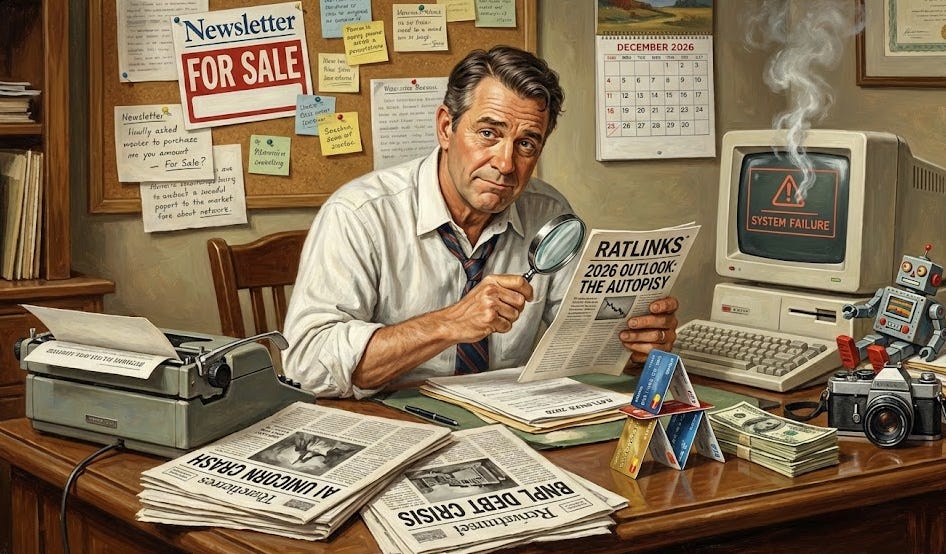
Scroll through any “2026 Outlook” published this month. You’ll find predictions engineered in a laboratory to be unfalsifiable. “AI will continue reshaping industries.” “Political tensions will remain elevated.” “Consumer behavior will evolve.” These aren’t predictions. They’re horoscopes for people who went to business school. They protect the predictor while offering the reader nothing.
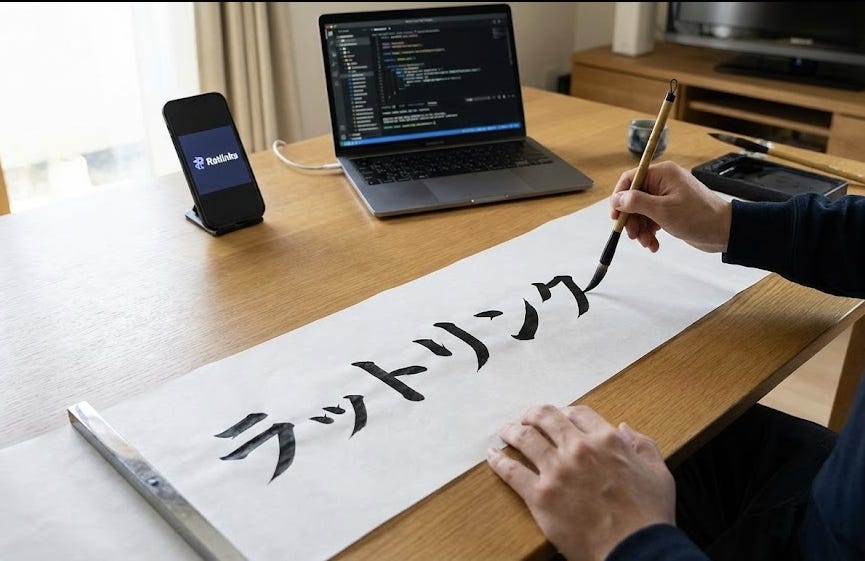
The Japanese have a better approach. Every January 2nd, there’s a tradition called kakizome: the first writing of the year.
You grind fresh ink, take up a brush, and write your intentions in careful calligraphy. No backspace key. No “well, actually” in the margin. The ink dries and the words exist. At month’s end, you burn the paper at a festival. If the ashes fly high, your skills will improve. If they don’t, at least you had the nerve to commit.
So here’s my kakizome. Six predictions and one bet on myself. Each one has a timestamp. Each one has a measurable outcome. Each one will make me look either prescient or stupid in exactly twelve months when the ashes settle.
THE AUTOPSY OF A WRAPPER
By December 31, 2026, at least one AI “unicorn” will sell for less than 20% of its peak valuation or quietly shut its doors.
Jasper AI remains the memento mori of this cycle. They raised $125 million at a $1.5 billion valuation by selling a thin layer of UX over OpenAI’s GPT-3. Then OpenAI released ChatGPT for free, and Jasper’s moat evaporated overnight. Today, they are led by a veteran of the Dropbox “managed decline” era an executive brought in not to build, but to harvest the remaining enterprise contracts before the lights go out.
They committed the cardinal sin of the API era: Building a markup instead of a product.
In the old world, you built on Windows or AWS and expected a stable foundation. In the AI world, your infrastructure provider is also your most aggressive competitor. When you build on someone else’s model, you aren’t a partner; you’re a sharecropper. The moment the platform decides your niche is worth having, they don’t buy you—they just update their software.
I know the physics of this burn. GiftGenius and Reheat.ai taught me that when you live on borrowed intelligence, your margins are a ticking clock. Your compute costs are fixed by your landlord, but your customer acquisition costs (CAC) go vertical as the platforms themselves bid against you.
The “Annualized Monthly Revenue” that VCs worshipped in 2024 is turning out to be a high-interest loan on a future that was never for sale. Somewhere right now, a board member of a “top-tier” AI startup is staring at a retention curve that looks like a cliff and preparing the “strategic alternatives” memo.
By 2026, the first wave of AI unicorns won’t be legendary; they’ll be case studies in the high cost of API arbitrage.
See Ratlinks: The $100 Startup for how the machines ate my machines.
THE THREE DEFENSES
AI will automate the process. It will also explode the risk. Every time a company replaces a salary with a model, they are trading a manageable human cost for a massive, unhedged liability.
By 2026, these won’t be “emerging roles.” They will be the most expensive seats in the C-suite—the only people the board actually listens to when the machines start talking back.
1. The Liability Architect Every prompt your company ships is a latent legal contract. When an Air Canada chatbot hallucinated a refund policy in 2024, the courts didn’t care that “the AI said it.” They held the company to the hallucination.
The Liability Architect is the black-box bomb squad. They don’t “write prompts”; they engineer the technical and legal guardrails that prevent a rogue sentence from bankrupting the firm. Part lawyer, part coder, part actuary. They treat a system message with the same forensic scrutiny a partner at Goldman gives a merger agreement.
The Stake: If they miss a line, the company is on the hook for every hallucinated promise the machine makes to a million customers simultaneously.
2. The Context Arbiter AI is a mean-reverting machine. It produces the statistical average of its training data. When everyone uses the same models, every ad campaign, every logo, and every strategic deck begins to look identical. This is the Gray Goo Problem: total brand invisibility through mathematical perfection.
The Context Arbiter is paid to reject the “perfect” AI output in favor of the human friction that actually sells. They are the arbitrageurs of the weird. In a world of infinite, free, mediocre content, taste is the only defensible moat left. They ensure the brand doesn’t just function—it resonates.
The Stake: In a world of infinite content, being “average” isn’t just a failure of creativity; it’s a death sentence for your margins.


3. The Forensic Humanist We are approaching the Dead Internet horizon. Within twenty-four months, 95% of digital interactions—the emails in your inbox, the candidates in your ATS, the voice on your Zoom call—will be synthetic. Trust is no longer the default. It is a luxury good.
The Forensic Humanist manages the collapse of trust. Their job is verifying that the “high-value” vendor you’re wiring $2M to exists in physical space and that your new VP of Finance isn’t a real-time deepfake. They don’t use CAPTCHA. They use forensic audio analysis, localized “proof-of-life” protocols, and old-school investigative tradecraft.
The Stake: One synthetic hire is all it takes to gut a company’s data and culture from the inside.
The historical shift from “Webmaster” to “Social Media Manager” was about capturing opportunity. This shift is about managing catastrophe.

COLD HARD CASH
Last month I paid for dinner with a fifty and felt something I hadn’t felt in years: the money leaving.
Not the abstraction of a number ticking down in an app. The physical fact of handing someone paper and watching it disappear into a register. I spent less that night. Not because I’d planned to. Because every purchase required me to feel it.
I started carrying cash more often. Turns out I’m not alone.
By the end of 2026, cash usage among 18-29 year-olds increases year-over-year for the first time since 2019. The catalyst: a viral “cash diet” challenge that breaks ten million views on TikTok.
This should be impossible. Gen Z is the Venmo generation. Apple Pay natives. But follow the threads.
Financial Privacy as a Luxury Good: Every digital transaction is a data point sold to a broker, a risk scored by an insurer, and a footprint tracked by a platform. In an age of total transparency, cash is the only payment method that doesn’t snitch.
The Insurance of the Tangible: The “de-banking” discourse has moved from the fringes to the mainstream. When access to your own capital can be throttled by a Terms of Service update or a social media “violation,” physical currency stops being quaint. It starts being an insurance policy against institutional overreach.
Friction as a Feature: Gen Z was raised on the frictionless ease of Apple Pay and “One-Click” debt. A new generation is discovering that when you remove the friction from spending, you remove the control. Cash is a manual override for a life lived on autopilot.
Cash fits the pattern. Not as regression. As rebellion.
BUY NOW, PAY NEVER
Americans owe $46 billion in Buy Now, Pay Later (BNPL) loans. But that number is a fiction. Because these loans bypass the credit bureaus, the real debt load is invisible, un-tracked, and un-hedged. It is a $46 billion ghost haunting the American balance sheet.
BNPL isn’t a financial product; it’s a high-speed treadmill. The average user isn’t just “splitting a payment”; they are managing a six-week cash-flow crisis across three or four different apps simultaneously. They are borrowing from Affirm to pay Klarna, using the “pay-in-four” float to bridge the gap between a maxed-out Visa and a late paycheck.
The duration is the detonator.
In traditional lending, a recession is a slow bleed. If you have a 30-year mortgage or a 5-year car loan, the system can absorb a few months of friction. But BNPL loans live for six weeks. This short duration—the industry’s greatest selling point—is its fatal flaw.
When the consumer finally hits a wall—due to student loans, inflation, or a cooling job market—the defaults won’t trickle in. They will cascade. Because the cycles are so short, a “slight slowdown” in consumer spending translates into a total liquidity freeze for the lenders in less than a quarter.
By December 31, 2026:
The Danger Zone: Either Affirm, Klarna, or Afterpay will report delinquencies breaching the 7% threshold—a number that traditional banks would consider a catastrophe.
The Sunlight Clause: The CFPB will mandate that all BNPL debt be reported to credit bureaus. The sudden “transparency” will reveal millions of subprime borrowers overnight, triggering a massive, automated credit crunch.
The Retail Retreat: At least one “Tier 1” retailer (think Target or Amazon) will drop or distance themselves from a major BNPL partner as fraud rates and “debt-spiraling” customers become a brand liability.


The “Buy Now, Pay Later” era was built on the assumption of infinite friction-less spending. By 2026, we find out what happens when the friction returns all at once.
THE COVER CHARGE FOR CONNECTION
For $250, joinmywedding.com will sell you a seat at an authentic Indian wedding. You aren’t a crasher; you are a paying guest. You show up, you participate in the ritual, and you leave with the one thing a digital life can’t manufacture: a high-stakes human memory.
This isn’t a sign of desperation. It’s a sign of Market Efficiency.
We are witnessing the commodification of the “Third Place.” For decades, social capital was a byproduct of proximity—the office, the church, the neighborhood bar. But as those institutions have hollowed out, the supply of organic connection has cratered while the demand has remained fixed.
When supply drops and demand stays high, a market forms.
By December 31, 2026, “Social Access” will be a recognized venture capital category. We are moving past the “Influencer” era (where you pay to watch) into the “Access” era (where you pay to be in the room). The transaction doesn’t have to feel transactional; in fact, the premium is paid for the omission of the transaction—the feeling that you actually belong there.
The Prediction: A platform specializing in “Curated Intimacy”—think dinner parties with specific intellectual or professional tiers—will raise a Series A led by a Tier 1 firm. It will be marketed as “social networking,” but it will function as a utility for the lonely elite.
We used to call this “paying for friends.” By 2026, we’ll just call it a subscription to a meaningful life. The loneliness economy isn’t a tragedy; it’s the next multi-billion dollar arbitrage.
THE HOUSE BET
By December 31, 2026, Ratlinks IP is optioned for adaptation or the newsletter sells to a larger network.
I’m putting myself up for sale.
Ratlinks has been running for six years. The archive includes over 70 pieces of original analysis at the intersection of pop culture and economics. The voice is distinctive. The format is proven. The back catalog is a book waiting to happen.
I’ve spent this year watching AI eat content. Watching newsletters consolidate or die. Watching the window for independent voices narrow. The play isn’t to keep grinding for subscriber growth. The play is to package the IP and find a buyer or a partner who can scale it beyond what one person with a laptop can do.
This prediction is my accountability. If Ratlinks is still exactly what it is today in December 2026, I failed. Not because the newsletter failed. Because I didn’t make the move.
I’m either selling, optioning, or proving I should have.
ALSO RANS
The Wedding Leak. A boomer celebrity unknowingly livestreams Taylor Swift and Travis Kelce’s wedding, breaking both the internet and media embargo before the official photos drop. In 2019, Diplo livestreamed Sophie Turner and Joe Jonas’s secret Vegas ceremony on Instagram with dog face filters. Joe Jonas later said Diplo “loves his ‘gram more than a 13-year-old.”
The Bug Backlash. Commodity spikes push alternative proteins into mainstream grocery aisles. Cricket flour appears in a Super Bowl commercial. Americans decide they’d rather pay more for beef.
The Butcher of Fleet Street. Driverless cars roll out faster than expected. A 22-year-old in Phoenix buys six Teslas and runs an unlicensed delivery fleet from his apartment. He gets profiled in Forbes before he gets sued. The profile calls him a “visionary.” The lawsuit calls him a defendant.
Crypto’s Gift Card Era. Three major retailers launch their own stablecoins. The use case is identical to store credit. Bitcoin maxis declare victory anyway. Alt-coins crater as pre-revenue turns out to be better than revenue. Russ Hanneman was right: “If you have no revenue, you can say you’re pre-revenue. You’re a potential pure play.” (Going Ape covered the meme coin mania.)
The Pardon Parade. Trump pardons at least five celebrities. Here’s my shortlist, ranked by likelihood:
Joe Exotic (60%) — Already hired a lawyer who went to military school with Trump. The Netflix documentary gave him the cultural footprint. Trump loves a redemption arc that plays on TV.
Teresa Giudice (50%) — Real Housewives is Trump’s demographic. She served her time. The optics are sympathetic.
Tekashi 6ix9ine (40%) — Proved snitching has no career consequences. Trump might respect the hustle.
Martha Stewart (35%) — Never actually pardoned. Still has the conviction. The “billionaire homemaker” angle writes itself.
Al Capone, posthumously (15%) — Trump has compared himself to Scarface multiple times. This would be pure chaos. I’m not betting on it, but I’m not ruling it out.
The Fabrication. A major news outlet runs a story that’s later exposed as entirely AI-generated. Not a content farm. Not a Substack. A real masthead. The reporter does the apology tour: “I was under deadline pressure and used AI as a research assistant. I take full responsibility.” Nobody gets fired. The byline quietly disappears from the masthead three months later. Sports Illustrated already got caught using fake AI authors. The infrastructure for failure is built. The only question is which masthead is next.
MAKE YOUR OWN PREDICTIONS
Drop your own 2026 predictions in the comments. Specific. Measurable. Falsifiable.
No “could” or “might” or “may see movement toward.” State what will happen. Put a date on it. Let the internet hold you accountable.